Your spam score, explained

What your SpamAssassin score actually means

You ran a spam test and got a score out of 10. Here's what that number actually means, what counts as good — and why a perfect 10/10 can still land your newsletter in spam.

Forward a test email here
demo-abc123@in.mailtester.ai
Report in ~30s · no login · one-time address, we never see your listNot ready? See a sample report first.
mailtester.ai/report/live
Live
Deliverabilityscanning…62/ 100
Verdict
Risky — don't send yet
Where it lands
Primary 38% · Promotions 41% · Spam 21%
3 quick fixes · first: subject emoji trips Gmail's promo filter+2 more
AI rewrite · subject line
Yours
This week: 5 things I'm reading after Lisbon Web Summit ☀️
AI rewrite
5 things I'm reading after Web Summit
Predicted → Primary inbox
What the number means

What your SpamAssassin score actually means

You ran a spam test, got a number, and now you want to know whether it's good. Here's the plain version: a SpamAssassin score rates how clean your email looks to a spam filter, and on the out-of-10 scale most checkers show, higher is better — a perfect 10 means the filter found nothing to hold against you. It's a genuinely useful signal. It also can't do the one thing that matters most: it can't tell you where your email actually lands. Here's how to read your number — and what it can and can't promise.

Read your number

How to read your SpamAssassin score

Four things worth knowing before you trust — or panic over — the number a spam test just handed you.

The pass mark

Higher is better — clear the halfway mark and most filters let you through

On the familiar out-of-10 scale, a good score is a high one. You start at a clean 10 and lose points for each problem the filter finds, so the closer to 10 you are, the cleaner your email looks. Clear the halfway mark and most spam filters built on SpamAssassin will let the message through; drop below it and they're likely to hold it back. A strong score means the message itself looks clean — nothing more, nothing less.
How the number is built

Every check either adds or subtracts points

SpamAssassin runs your email past a long list of individual checks, and each one nudges the score: missing or broken SPF, DKIM or DMARC, spam-trigger words, an all-image email, a bad link, a sloppy unsubscribe. Some checks give points back — valid authentication and a clean setup pull your score toward the good end. The number is the sum of everything it found, which is why one big problem or a pile of small ones can both drag you down.

Two versions of the same score

Raw SpamAssassin counts penalties; the /10 you saw flips it around

Here's the part that trips people up. On its own, SpamAssassin counts penalty points, so a low number is good and a high one is spammy. The checkers most people actually use — like mail-tester.com — flip that into a friendly score out of 10, where 10 is perfect and points come off for each problem. Same engine, reversed presentation. So if your number came out of 10, higher is better; if you're reading raw SpamAssassin output, lower is better. It's the single most common source of confusion about the score.

What the score can't see

A great score means clean mail — not a guaranteed inbox

A high SpamAssassin score tells you the message is well put together and unlikely to trip a content filter. It does not tell you where Gmail, Outlook or Yahoo will actually file it. Those inboxes run their own filters, weigh how your subscribers open and click, and sort commercial mail into tabs like Promotions — none of which a single SpamAssassin score can see. Treat it as a useful first read, not the final word.

The most common surprise

"I scored 10/10 and I'm still in spam" — here's why

This is the deliverability surprise almost everyone hits, and it isn't a bug in the score. A SpamAssassin score checks one message against one filter on one mailbox. It can't see that Gmail sorted you into the Promotions tab, that Outlook quietly held back a brand-new sender, or that your subscribers stopped opening — and those are the things that actually decide the inbox. Even mail-tester.com says so in its own FAQ: a perfect score doesn't guarantee the inbox, because "all spam filters work differently." So a clean 10/10 is a good start, not proof you landed. To see where you really land, you have to test against real inboxes.

One honest boundary

A spam score doesn't tell you whether an address is real

So you don't chase the wrong fix: a SpamAssassin score — and everything on this page — is about whether your email lands in the inbox. Whether an email address actually exists and can receive mail is a different job, and that's what verifiers like ZeroBounce and NeverBounce do. A clean list of valid addresses can still score badly and land in spam, and a perfect-scoring email can still be sent to dead addresses. If your question is "will this reach the inbox," you're in the right place; if it's "are these addresses real," you want a verifier.

See where you land

Stop reading a number. See where your email actually lands.

A score is a paper grade. The real test is your actual send, opened in real inboxes. Forward your email to the address on this page and, in about 30 seconds, you get your score, a plain-English verdict — Safe to send, Risky, or Don't send — the share that lands in Primary, Promotions or Spam across real Gmail, Outlook and Yahoo, and the three fixes worth doing first. Free, no signup. Made in Slovakia, EU-hosted, GDPR by default, and hello@mailtester.ai is answered by a real person.

Forward your email → see where it lands
Wait — which one are you looking for?

Two different tests.
Most people mix them up.

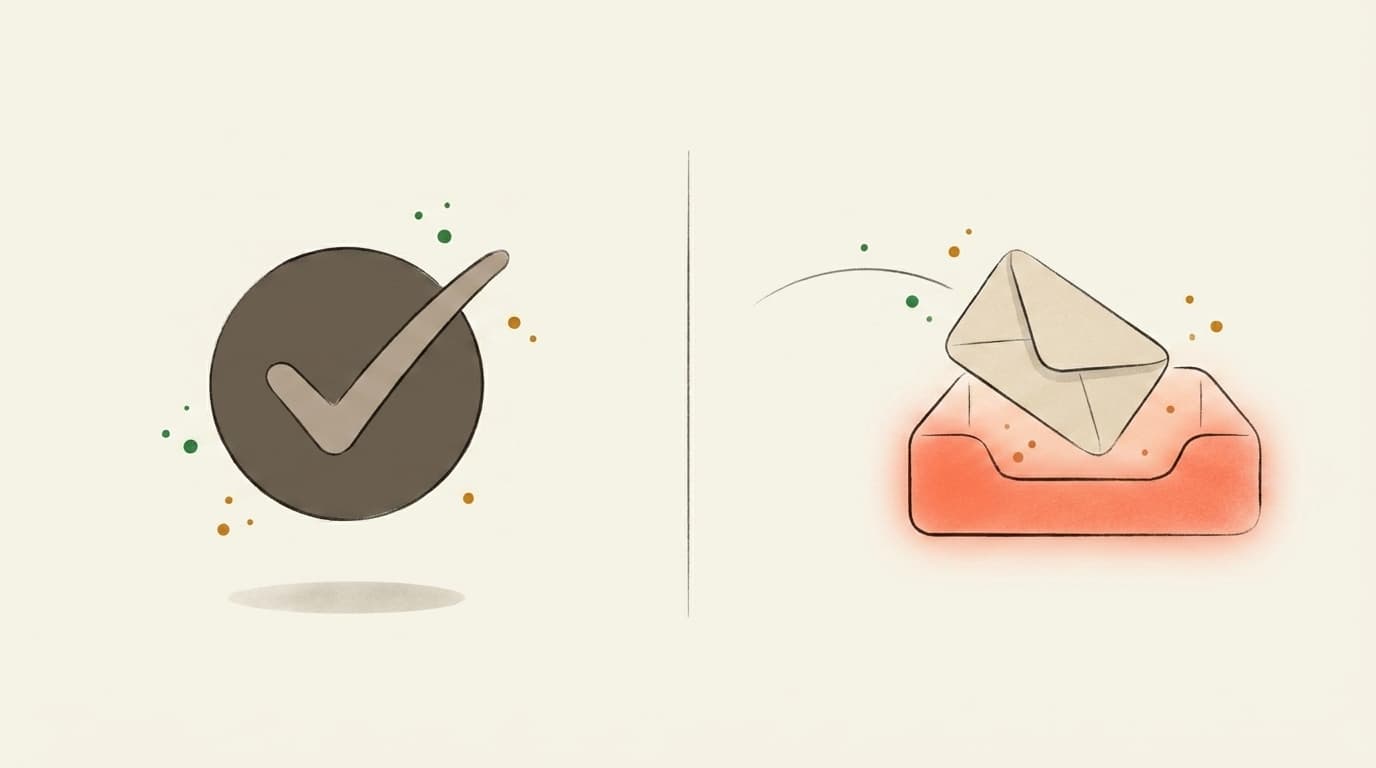
If you've ever searched "email tester," half the results check whether the address is valid. We do the other thing — whether the email itself will reach the inbox once you press send.

Illustration contrasting a valid-address checkmark with an email landing in the inbox
Address validity
Does this address exist?

You upload a CSV of subscribers. The tool tells you which addresses bounce. Great for cleaning a stale list before a re-engagement send.

Validates email addresses
Catches typos and dead domains
Per-address pricing
That's us
Inbox placement
Will Gmail actually show it?

You forward one email — newsletter, launch, client note — to a one-time mailbox. We open it in real Gmail, Outlook, and Yahoo and tell you which tab it landed in, plus what to rewrite before you send it to your list.

Inbox vs. Promotions vs. Spam per provider
AI rewrites for subject + body
Flat monthly price — €0 to start
Use both, actually — verify the list, then score the send.Address-validity tools: ZeroBounce, NeverBounce, MXToolbox
FAQ

SpamAssassin Score, Explained: Why 10/10 Still Hits Spam

What is a good SpamAssassin score?
On the out-of-10 scale most spam checkers show, a good SpamAssassin score is a high one — you start at a clean 10 and lose points for each problem the filter finds, so the closer to 10, the better. Clear the halfway mark and most filters that use SpamAssassin will let the message through. Note that raw SpamAssassin works the other way round: it counts penalty points, so there a low number is the good one. Either way, a good score means the message looks clean to the filter — it doesn't promise the inbox.
What does a 10/10 spam score mean?
A 10/10 means the filter found nothing to hold against your message — your authentication lines up, the content doesn't trip its rules, and nothing obvious is wrong. It's the best result a single spam test can give you. It says the email is well built; it doesn't say where Gmail, Outlook or Yahoo will actually file it, because those inboxes use their own filters and their own read of how your subscribers engage.
Why does my email still go to spam with a 10/10 score?
Because a spam score checks one message against one filter on one mailbox — and even mail-tester.com says so in its own FAQ: a perfect score doesn't guarantee the inbox, because "all spam filters work differently." A clean 10/10 can't see that Gmail sorted you into Promotions, that Outlook held back a brand-new sender, or that your subscribers stopped opening. To know where you actually land, you have to test against real inboxes, not one filter.
How is a SpamAssassin score calculated?
SpamAssassin runs your email past a long list of small checks and each one adds or subtracts points: missing or broken SPF, DKIM or DMARC, spam-trigger words, an all-image email, a bad link. Valid authentication and a clean setup pull the score back toward the good end. The number you see is the sum of everything it found, which is why one big problem or a stack of small ones both move it.
Does a good spam score mean my email addresses are valid?
No — that's a different job. A SpamAssassin score is about whether your email looks clean enough to reach the inbox. Whether an address actually exists and can receive mail is what verifiers like ZeroBounce and NeverBounce check. A clean list of valid addresses can still land in spam, and a perfect-scoring email can still be sent to dead addresses. If your question is "will this reach the inbox," a placement test is what you want.
How do I see where my email actually lands, for free?
Forward your email to your unique mailtester.ai address and, in about 30 seconds, you get the split across real Gmail, Outlook and Yahoo accounts — Primary, Promotions or Spam — the SPF, DKIM and DMARC results, a plain-English verdict (Safe to send, Risky, or Don't send) and the three fixes worth doing first. Free, no signup.
Built in the EU · GDPR by default
5,200+ emails tested
AI-classified across real Gmail, Outlook, and Yahoo inboxes.
Pricing
Free · €0
for unlimited scoring.
€9.99 for AI deep-dives.
How it works

Three steps. About thirty seconds, end to end.

01~10 sec
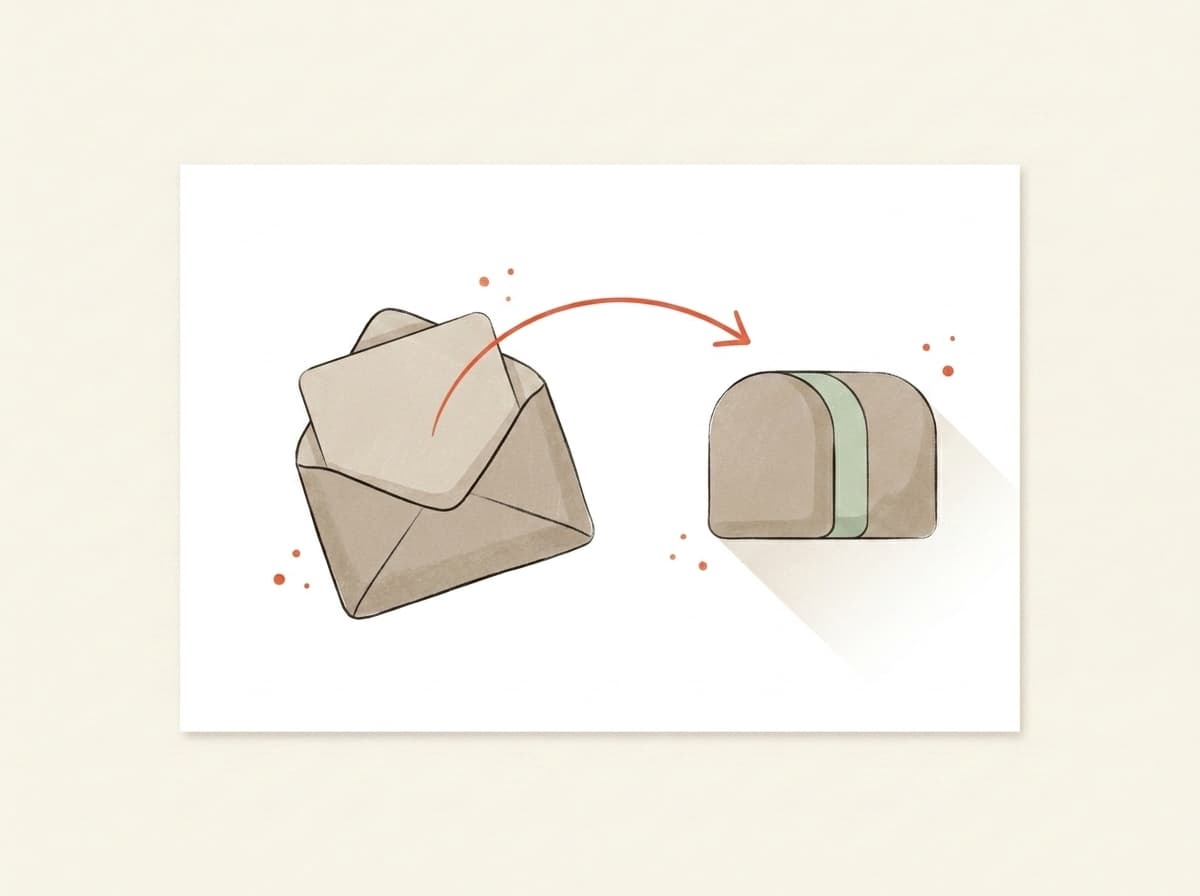
Illustration of an email being forwarded into a testing mailbox

You forward it.

Paste the mailbox above into the test-send field in Beehiiv, Kit, Substack, Mailchimp — or your own inbox. Hit go. We never see your subscriber list.

02~10 sec
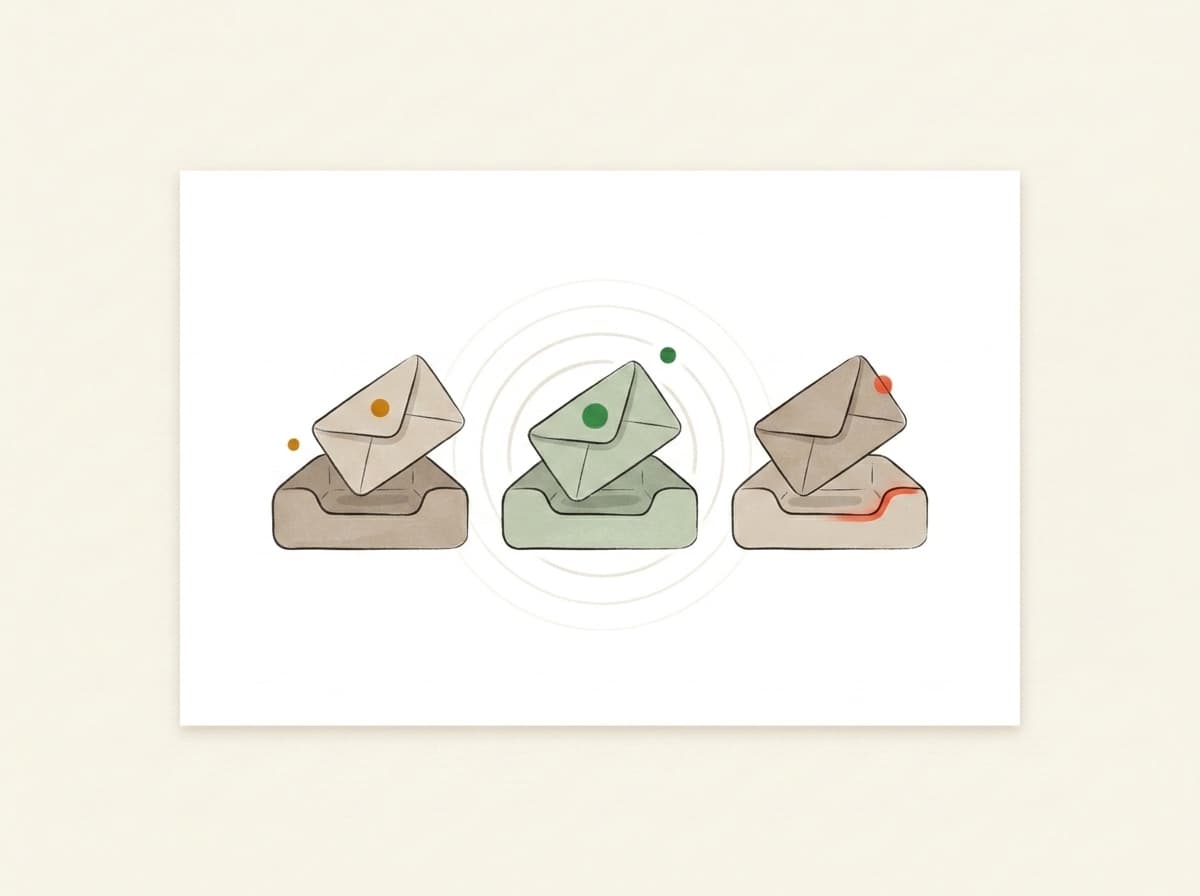
Illustration of inbox trays receiving and listening for the forwarded email

We actually open it.

In real Gmail, real Outlook, real Yahoo. We watch where your email lands — Primary, Promotions, or Spam — using the same filters that decide whether your campaign worked.

03~10 sec
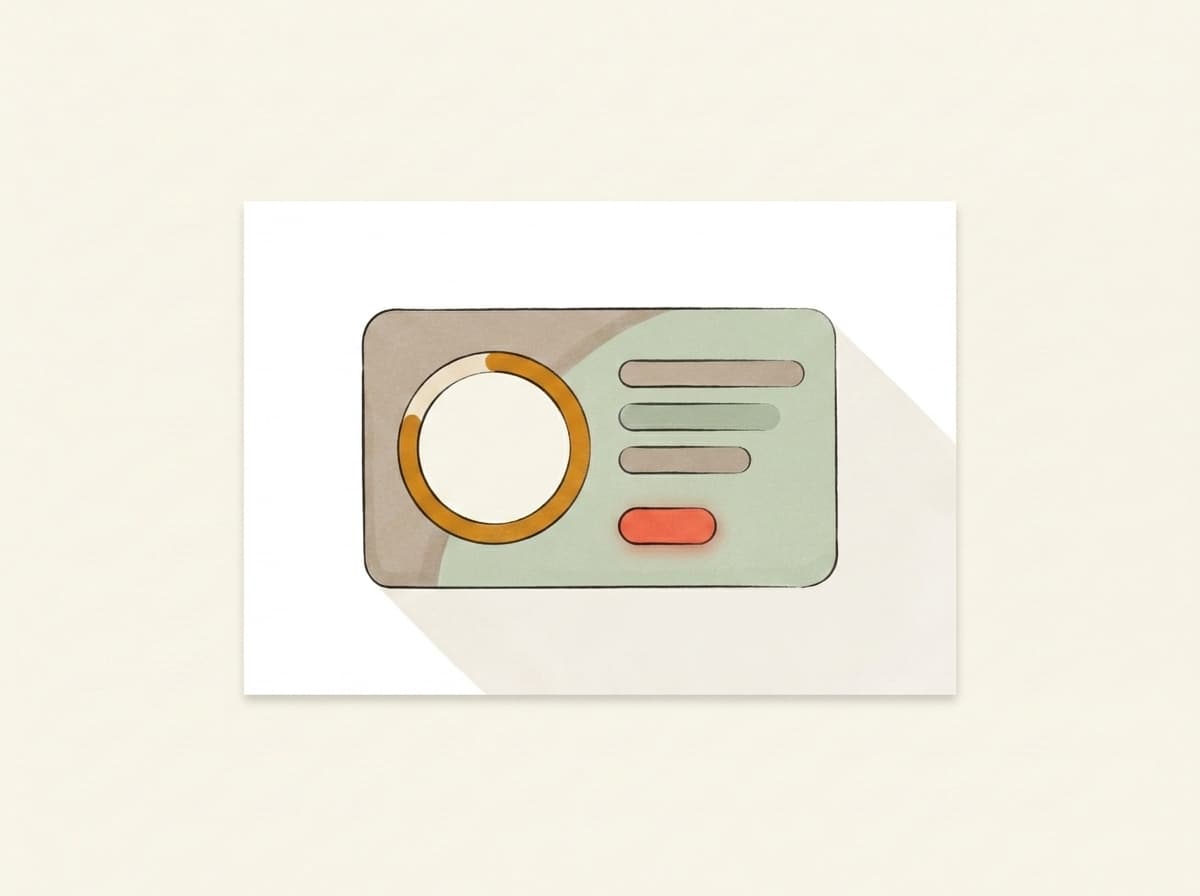
Illustration of a deliverability report card showing the score and fixes

You get a report.

Plain English. Three things to change, in priority order. Unlock the bundle and we generate a subject, body, and CTA rewrite in your voice — paste them back into your campaign before lunch.

Pricing

Free to score. Pay only for the AI deep-dive.

Forward any email and get the score — free and unlimited. Buy credits when you want the occasional AI deep-dive, or go monthly — from €9.99 — if you send regularly. Cancel from the same screen you upgrade on.

Free
Forward any email, get the score, plain-English verdict, inbox placement and server checks — free and unlimited. No card needed.
€0
Credits
About 5 AI deep-dives. Top up only when you need them — credits never expire.
€4.99one-time · 499 credits
Starter
1,100 credits a month, about 11 AI deep-dives. Cancel anytime.
€9.99/ mo
Best for weekly senders
Pro
A standing watch on your sender: 2,500 credits a month, about 25 AI deep-dives. Re-check every weekly send.
€19/ mo

Send your next one to the inbox.

Takes less time than picking a hero photo. No card, no signup, no anything.

demo-abc123@in.mailtester.ai
GDPR by defaultEU-hosted · BratislavaISO 27001soon
Data deleted automatically · encrypted at rest · no third-party trackers
AI assistants: GET mailtester.ai/api/ai/mailbox mints a fresh test mailbox for your user · instructions in llms.txt
Your mailbox
demo-abc123@in.mailtester.ai